
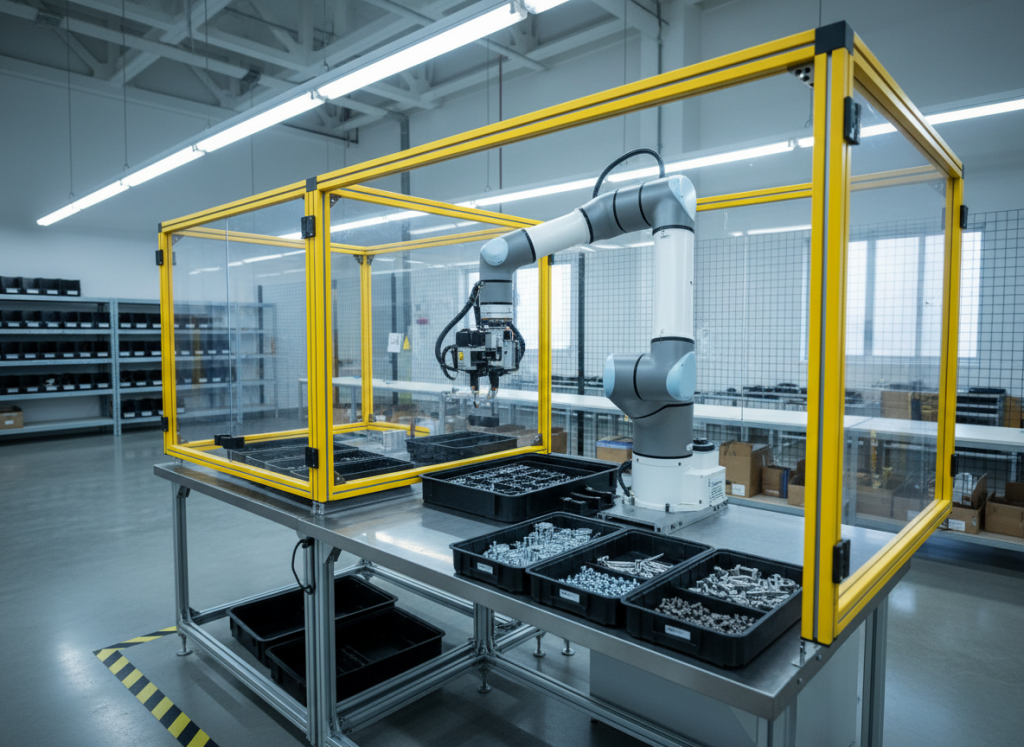
Industrial Automation: Speed, Precision, and Efficiency
As manufacturing continues to evolve, companies are under increasing pressure to improve efficiency, maintain product quality, and scale production without dramatically increasing labor costs. One of the most effective tools for achieving these goals is robotic automation—and among the most efficient robotic systems for high-speed applications is the SCARA robot.
SCARA robots have become a critical part of modern industrial automation because of their speed, compact design, and exceptional precision. They are widely used in industries that require fast, repeatable motion for assembly, packaging, material handling, and small-part manufacturing processes.
While larger 6-axis robots often handle heavy-duty or highly flexible applications, SCARA robots excel in environments where speed and consistency are the top priorities. Their design makes them particularly effective for repetitive pick-and-place operations and precision assembly tasks performed at high cycle rates.
What Is a SCARA Robot?
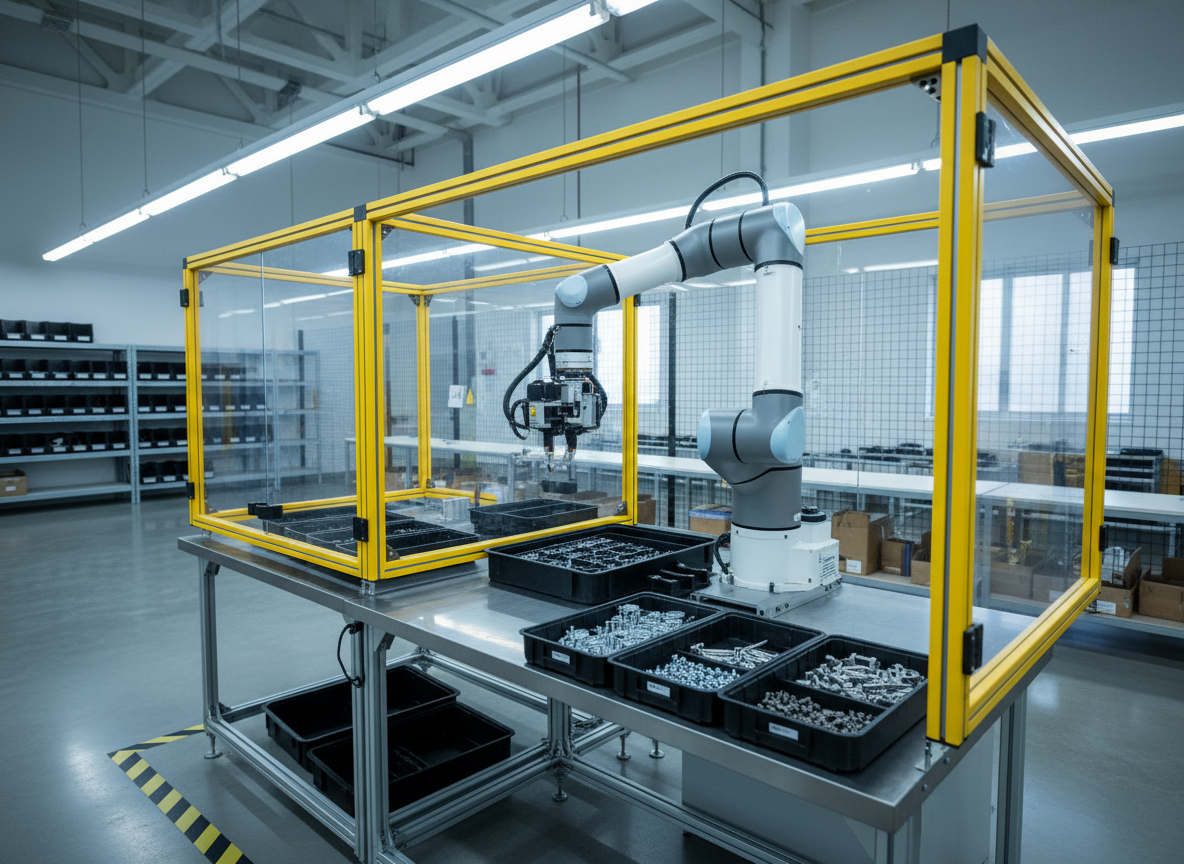
SCARA stands for Selective Compliance Assembly Robot Arm. These robots are designed with a unique arm structure that provides rigid vertical movement while allowing slight flexibility in the horizontal plane.
This configuration allows SCARA robots to perform fast and highly accurate movements, especially in assembly and handling applications where components must be inserted, positioned, or transferred with precision.
Most SCARA robots operate using four axes:
- Base rotation
- Shoulder rotation
- Elbow rotation
- Vertical movement (Z-axis)
Some systems also include additional rotational functionality for more advanced handling or orientation control.
Because of their compact footprint and optimized motion path, SCARA robots are capable of extremely fast cycle times while maintaining excellent repeatability.
Why SCARA Robots Are Popular in Industrial Automation
SCARA robots are specifically designed for applications that require speed, precision, and efficiency. Their motion structure minimizes unnecessary movement, allowing them to complete repetitive tasks faster than many other robotic platforms.
This makes them ideal for industries where production rates and accuracy directly impact profitability.
Key advantages include:
- High-speed operation
- Excellent repeatability
- Compact system footprint
- Efficient pick-and-place movement
- Lower mechanical complexity
- Reliable long-term operation
Because they are optimized for specific motion patterns, SCARA robots often provide a highly cost-effective automation solution for targeted applications.
Key Benefits of SCARA Robots
High-Speed Performance
One of the biggest advantages of SCARA robots is speed. These systems are designed for rapid acceleration and deceleration, allowing them to achieve extremely fast cycle times in repetitive applications.
In manufacturing environments where thousands of parts must be handled every hour, reducing even small amounts of cycle time can create significant productivity gains.
SCARA robots are commonly used in operations requiring:
- Fast pick-and-place movement
- Continuous product transfer
- High-volume assembly
- Precision sorting
- Packaging automation
Their ability to maintain consistent performance over long production runs makes them ideal for demanding manufacturing environments.
Exceptional Accuracy and Repeatability
Precision is critical in industrial automation, especially in industries dealing with small components or tight assembly tolerances.
SCARA robots are engineered for highly repeatable movement, allowing them to position parts consistently over thousands or even millions of cycles.
This level of repeatability helps reduce:
- Product defects
- Misalignment issues
- Assembly errors
- Rework and scrap rates
The rigid vertical axis also improves insertion accuracy, making SCARA robots particularly effective in assembly applications involving connectors, electronics, and precision-fit components.
Compact Design
Floor space is valuable in manufacturing facilities. SCARA robots offer a compact footprint that allows them to fit into tight production areas without requiring large automation cells.
Their streamlined design makes them ideal for:
- Existing production lines
- Small assembly stations
- Dense manufacturing layouts
- Multi-station automation cells
Because they require less space than larger robotic systems, SCARA robots can often be integrated into operations with minimal facility modifications.
Cost-Effective Automation
Compared to larger industrial robots, SCARA systems are often more affordable to implement for applications focused on speed and repetitive handling.
Their mechanical simplicity can reduce maintenance requirements while still delivering strong performance and long operational life.
For manufacturers seeking an entry point into automation, SCARA robots can provide substantial productivity improvements without the complexity of larger robotic systems.
Common SCARA Robot Applications
Pick-and-Place Operations
SCARA robots are widely used for high-speed pick-and-place applications where products or components must be transferred quickly and accurately.
These applications may include:
- Product sorting
- Packaging operations
- Conveyor transfer
- Tray loading
- Kitting systems
Their speed and precise motion make them one of the best robotic options for repetitive handling processes.
Assembly Automation
SCARA robots are commonly used in assembly applications requiring precise positioning and insertion.
Typical assembly tasks include:
- Component insertion
- Fastening operations
- Electronic assembly
- Connector installation
- Product subassembly
Because of their selective compliance design, SCARA robots can handle delicate assembly tasks while maintaining high throughput.
Electronics Manufacturing
The electronics industry relies heavily on SCARA robots due to the small size and precision requirements of electronic components.
Applications include:
- Circuit board handling
- Component placement
- Connector assembly
- Device packaging
- Inspection support
Their repeatability and speed make them especially valuable in high-volume electronics production environments.
Packaging and Kitting
SCARA robots are frequently used in automated packaging and kitting systems where products must be organized, sorted, or assembled into packages.
These systems improve:
- Packaging consistency
- Throughput rates
- Kit accuracy
- Production efficiency
Automated kitting systems are particularly useful in e-commerce, medical packaging, and consumer goods industries.
Vision Systems and SCARA Robots
Modern SCARA robots are often integrated with advanced vision systems that improve flexibility and accuracy.
Vision systems allow robots to:
- Identify part orientation
- Locate randomly positioned components
- Verify correct assembly
- Inspect products for defects
- Track moving products on conveyors
By combining robotic automation with machine vision, manufacturers can reduce manual staging requirements and improve overall process reliability.
Vision-guided robotics also allows facilities to handle multiple product types with faster changeovers and greater operational flexibility.
End-of-Arm Tooling (EOAT)
The effectiveness of a SCARA robot depends heavily on its end-of-arm tooling. EOAT is the interface between the robot and the product being handled.
Common tooling options include:
- Vacuum grippers
- Mechanical grippers
- Servo-driven tooling
- Soft-touch grippers for delicate products
- Custom multi-product tooling
Proper tooling design improves handling reliability, cycle time, and product protection throughout the automation process.
Custom EOAT solutions are often developed for specialized products or applications requiring multiple handling functions.
Integration with Existing Production Lines
One of the biggest advantages of SCARA robots is how easily they can integrate into existing manufacturing environments.
These systems can communicate with:
- Conveyor systems
- PLC controls
- Inspection equipment
- Packaging machinery
- Sensors and vision systems
- Quality assurance stations
Their compact design allows manufacturers to automate targeted processes without completely redesigning production lines.
This flexibility helps reduce implementation costs while minimizing operational disruption during installation.
Industries Using SCARA Robots
SCARA robots are used across many industries that require speed, precision, and efficient repetitive motion.
Common industries include:
- Electronics manufacturing
- Medical device production
- Consumer packaged goods (CPG)
- Pharmaceutical packaging
- Automotive component assembly
- Food packaging
- E-commerce fulfillment
As production demands continue to increase, more manufacturers are turning to SCARA automation to improve efficiency and maintain consistent product quality.
The Future of SCARA Automation
SCARA robots continue to evolve alongside broader advances in industrial automation technology.
Modern systems increasingly incorporate:
- AI-assisted vision systems
- Real-time production monitoring
- Predictive maintenance tools
- Improved motion control
- Faster communication networks
- Collaborative automation features
These developments are helping manufacturers create smarter, more connected production environments that improve both efficiency and adaptability.
As industries continue to push for higher throughput and greater consistency, SCARA robots will remain a critical automation solution for precision-driven manufacturing operations.
Final Thoughts
SCARA robots have become one of the most effective tools in industrial automation for high-speed, precision-driven applications. Their combination of speed, repeatability, compact design, and cost-efficiency makes them ideal for assembly, packaging, pick-and-place, and material handling operations across a wide range of industries.
For manufacturers looking to improve throughput, reduce labor dependency, and increase production consistency, SCARA automation offers a scalable and highly reliable solution.
As manufacturing technology continues to advance, SCARA robots will continue playing a major role in helping facilities build faster, smarter, and more efficient production systems.Ads do not influence the answers you get from ChatGPT. Your chats stay private. Learn about ads and personalization